1. An Overview of the Cinnamon Tree
Botanical Information
-
Other names: Que bi, Que don, Nhuc que, Chinese cinnamon…
-
Genus: Cinnamomum, Family: Lauraceae (Laurel family)
According to documents, Cinnamomum is a large genus with about 270 species. Most are woody trees, mainly distributed in tropical regions of Asia such as China (12 species), India (20 species), and Vietnam (40 species). In Vietnam, many species called “cinnamon” can be found growing wild or cultivated in provinces like Yen Bai, Quang Ninh, Quang Nam, and Thanh Hoa. Prominent and widely used species include:
-
Cinnamomum cassia: Chinese cinnamon, Que don
-
Cinnamomum zeylanicum: Ceylon cinnamon, Sri Lankan cinnamon
-
Cinnamomum loureirii: Vietnamese cinnamon, Que thanh, Que quy
-
Cinnamomum burmannii: Indonesian cinnamon, Que xanh, Que bi
According to Professor Do Tat Loi, the value of cinnamon bark varies depending on its position on the tree:
-
Lower bark (Que ha can): Bark harvested from 0.2–1.2 meters above the ground — lower value
-
Upper trunk bark (Que thuong chau): From 1.2 meters upwards to the first branch — highest quality and value
-
Branch bark (Que thuong bieu): Bark from large branches
-
Twig bark (Que chi): Bark from small branches; sometimes refers to dried young twigs
1.2 Growth Characteristics
Wild cinnamon populations are found in evergreen forests at elevations of 500m (northern Vietnam) and above 700m (southern Vietnam). However, due to cultivation and natural selection, the quality of medicinal ingredients can differ slightly between wild and cultivated cinnamon.
Cinnamon is a shade-tolerant, sun-loving woody plant. It thrives in hot, humid tropical climates, with an annual average temperature of 22–30°C. It grows well in moist, humus-rich, loose, well-drained soils.
Propagation methods include branch cutting, seeding, and shoot division — each with its pros and cons. Cinnamon has a strong regenerative ability: after harvesting the bark, the tree is cut near the base, which stimulates the growth of new shoots, continuing the production of essential oils.
1.3 Description of the Cinnamon Tree
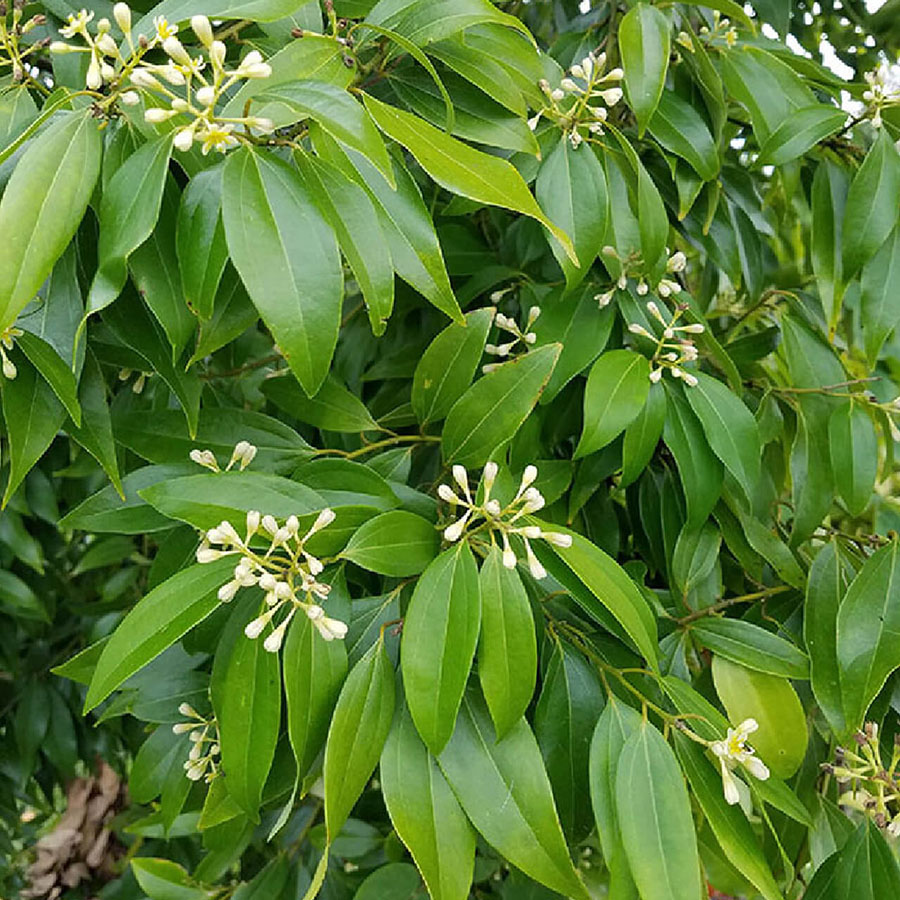
Although all species belong to the same genus, each cinnamon species has distinct features. Below are some botanical characteristics of Cinnamomum cassia Blume:
-
A large woody tree that can grow up to 10–20 meters tall
-
Cylindrical, sturdy branches with smooth brown surfaces
-
Strong taproot system that penetrates deep into the soil, making it resistant to strong winds
-
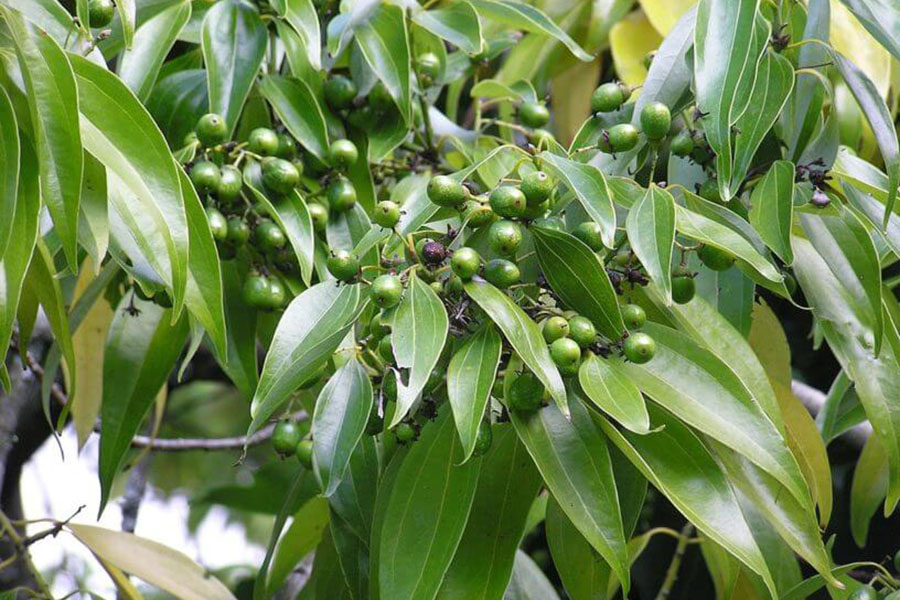
Leaves grow alternately, are thick and tough, lanceolate in shape (12–25 cm long, 4–8 cm wide), tapering at the base, pointed at the tip; dark glossy green on top, grayish underneath
-
Leaf petiole is thick, about 2 cm long, with grooves on the sides
-
Fruit is drupe-like, egg-shaped with ridges, enclosed in a persistent calyx
-
The whole plant is aromatic due to its essential oil content